
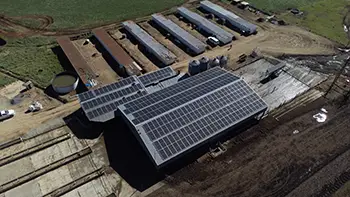
Solar Solutions for Agriculture
Off Grid Engineering offers innovative solar solutions tailored to the unique needs of the agricultural sector. By leveraging cutting-edge technology and expertise, we help farmers transition to sustainable energy sources, enhancing both efficiency and savings.
Off Grid Engineering’s solar solutions for farms are designed to significantly enhance efficiency and savings by providing a reliable and sustainable energy source. By reducing the dependency on Eskom’s unreliable grid and never-ending price increases, farmers can reduce energy costs and avoid the frequent power outages that disrupt operations.
Adding our advanced power distribution systems, including micro-grids and step-up and step-down transformers, ensures that energy is used optimally, reducing waste and improving the longevity of farm equipment. This comprehensive approach not only lowers operational costs but also boosts productivity, enabling farmers to focus on growth and innovation. With Off Grid Engineering, farms can achieve greater energy independence and financial stability, paving the way for a more prosperous future.
Efficient Power Distribution
Our solar solutions eliminate the dependency on Eskom transformers, providing a more reliable and cost-effective power source. By utilising efficient power distribution systems, farmers can ensure a steady supply of energy, reducing downtime and increasing productivity.
Micro-Grids
Micro-grids are a pivotal component of our solar solutions. These self-sufficient energy systems can operate independently or in conjunction with the main grid, offering flexibility and resilience. Micro-grids enable farmers to manage their energy usage more effectively, ensuring that critical operations continue uninterrupted even during power outages.
Step-Up and Step-Down Transformers
To optimise energy usage, Off Grid Engineering integrates step-up and step-down transformers into our solar solutions. These transformers adjust the voltage levels to match the specific requirements of various farm operations, ensuring that energy is used efficiently and effectively. This not only reduces energy waste but also extends the lifespan of electrical equipment.
By partnering with Off Grid Engineering, farmers can harness the power of solar energy to create a more sustainable and profitable agricultural operation. Our comprehensive approach ensures that every aspect of energy usage is optimised, from generation to distribution, providing a robust and reliable power solution for the future.
Solutions for Farms
Off Grid Engineering implements solar solutions for farms with a meticulous and comprehensive approach, ensuring seamless integration and maximum efficiency. Our process begins with a thorough assessment of the farm’s energy needs and existing infrastructure. This allows us to design a customised solar system that aligns perfectly with the farm’s operational requirements.
Once the design is finalised, our team of experts handles the installation of high-quality solar panels and inverters, ensuring optimal placement and connectivity. The solar system is then integrated with the existing both existing generators and the power grid, allowing the farm to draw energy from both the solar panels and the grid as needed. This multiple-source approach ensures a consistent and reliable power supply, even during periods of low solar generation.
To further enhance efficiency, we incorporate advanced monitoring systems that track energy production and consumption in real-time. This data-driven approach enables farmers to make informed decisions about energy usage, maximising savings and reducing waste. Additionally, any excess energy generated by the solar panels can be fed back into the grid, providing an opportunity for farmers to earn credits or reduce their overall energy costs.
Off Grid Engineering’s grid-tied solar solutions not only reduce dependency on traditional power sources but also promote sustainability and long-term financial benefits. By leveraging our expertise and cutting-edge technology, farmers can achieve greater energy independence and contribute to a greener future.